Recap: Dinner at Tokyo's Sushi Yuuki
This winter, in preparation for our inaugural tour, A Taste of Tokyo: The Finer Things happening this June, Nickie and I dined at six of Tokyo’s (+1 of Fukuoka’s!) sushi-ya. We were on an endless and impossible search for the best sushi in the world. Part one is below.
Sushi Yuuki - The Basics
Dining Date
Dec. 13, 2025 @ 17:00, Dinner Seating
How to Book
Quite easy on omakase.in about 1-2 weeks in advance.
Cost
Omakase course only, not including add-ons or drinks: JPY33,000
Photos
For a full photolog of this meal, check out Instagram stories for @Explore.Soigne starting here.
Background
Sushi Yuuki opened in March of 2024 and in just under two years has already managed to achieve a ~4.2 Tabelog rating, Tabelog Bronze (as of this week) and one Michelin star. These distinctions (and a rave review on Reddit) had my expectations sky-high going in. The chef is a disciple of the legendary Sushi Mizutani (which closed in 2016), the only sushi restaurant to debut at three Michelin stars right off the bat and my first ever omakase in Tokyo, which only added to the allure.
Located on a quiet street in Hiroo, we sat near the far end of the nine seat counter. Oddly, the underside of the counter was hot to touch which I later found out is a feature of some of the newer sushi counters meant to warm up the guests during winter. I just found it uncomfortable. Wine pricing was great as is usually the case in Japan and we went with a bottle of Domaine Charlopin 2022 Chablis Premier Cru ‘Fourchaume’ for the meal.
Tsumami (appetizers)
To kick off our much anticipated meal, we had seven Tsumami before Nigiri were served.
Kurage (Jellyfish) salad was mixed with seaweed and cucumbers marinated in ponzu and topped with sesame seeds. Nice and crunchy with a pronounced vinegar bite. Great flavor, but a different texture besides “crunchy” would have been nice to contrast with here.
Hotate (Scallop) and Uni (Sea Urchin) from Hokkaido cooked in a Hotate dashi (broth). While I’m sure the ingredients were sourced well, they were heavily overcooked which took away the subtlety of these delicate shellfish.
Next was a duo of Shiromi (White-fleshed fish) sashimi. Hirame (Flounder) was served raw and has a delicate sweetness and slight chew. Hata (Grouper), barely grilled on charcoal, was great with a nice texture and slight smokiness.
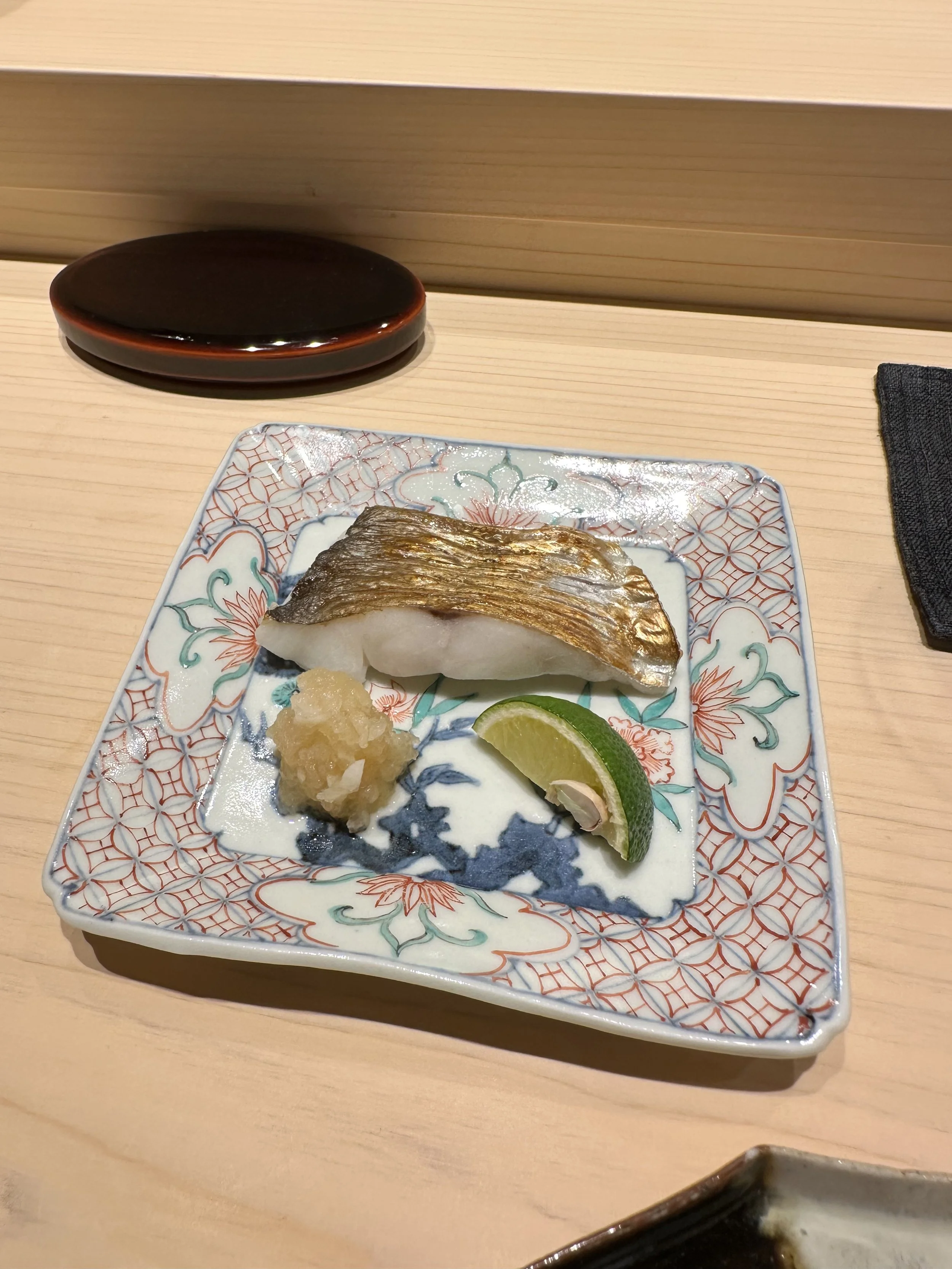
Grilled Ebodai (Japanese Butterfish) served with daikon and sudachi was again, sadly, overcooked.
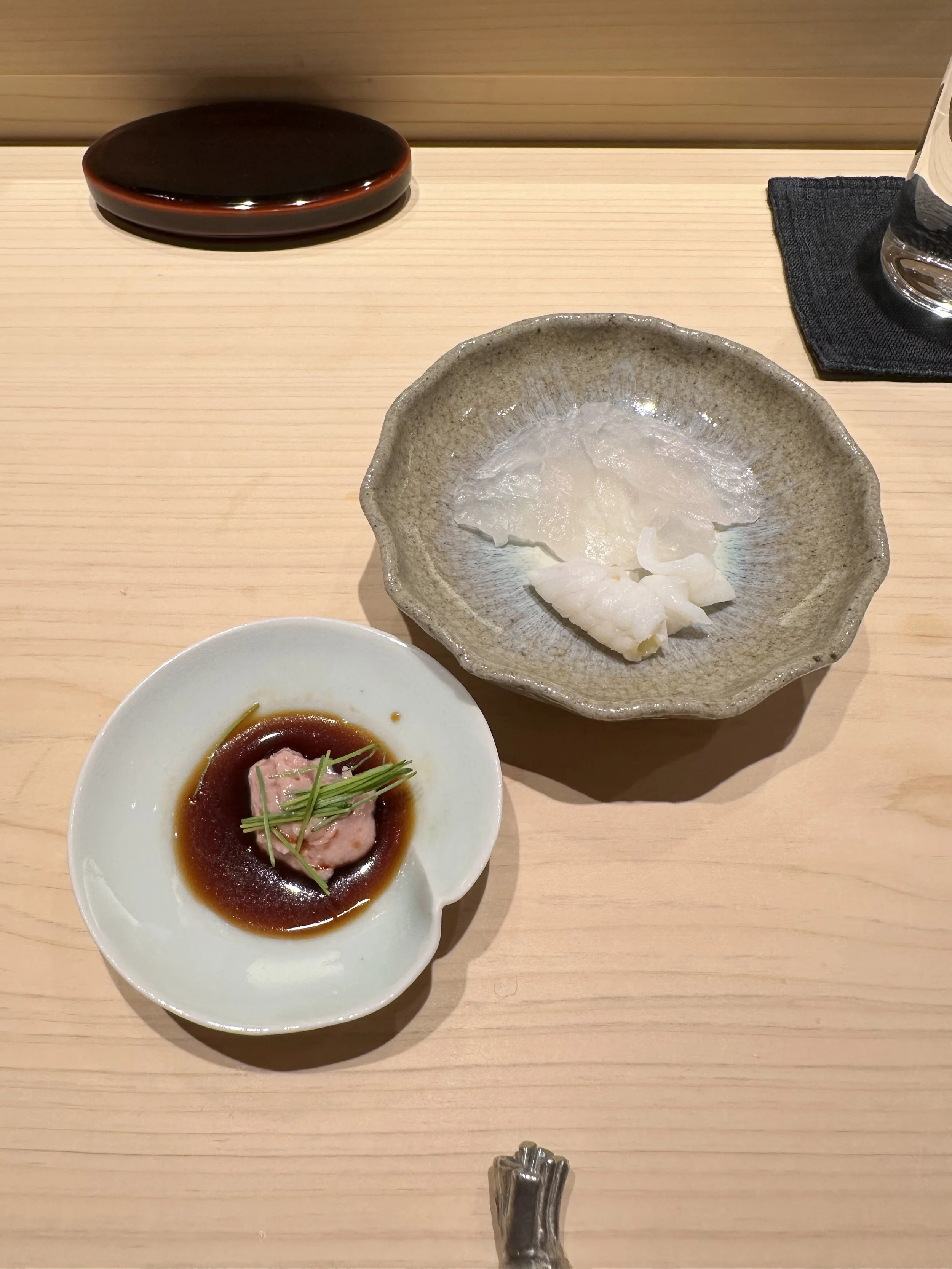
Next up was a trio of Kawahagi (Japanese Filefish). In one plate were raw sashimi slices and the boiled skin of the fish and in another was a sauce of the liver, soy and chives. This was the best course of the meal so far, with the softness of the skin, the slight chew of the sashimi and the clean, sweet creaminess of the liver (with no hint of minerality) working perfectly as a dipping sauce.
The richness continues over the next two courses with a very nice Shirako (Cod Sperm Sac) served warm in a starch-thickened dashi with Wakame seaweed and topped with yuzu zest. Then, a generous piece of Ankimo (Monkfish Liver) not overly sweetened as can sometimes be the case, but a little rougher in texture than the smoothest versions I’ve had.
Finally, steamed Shako (Mantis Shrimp) body meat and sweet pickled claw meat. Tasty, but haphazardly thrown on a plate with no real thought. Confusing end to a very inconsistent Tsumami sequence.
Nigiri
Sayori (Japanese Halfbeak) - Our first taste of the taisho’s shari (sushi rice) shows he’s going with the more modern style of more strongly vinegared rice. It contrasts nicely with the neta (fish topping) that has a very subtle chew that softens through smart scoring of the flesh.
Ika (Squid) by contrast was not scored at all and served with soy (versus salt/citrus that I typically prefer). I can appreciate not scoring the Ika to get the super crunchy texture but I think Ika needs some more salinity in that case which this piece was missing.
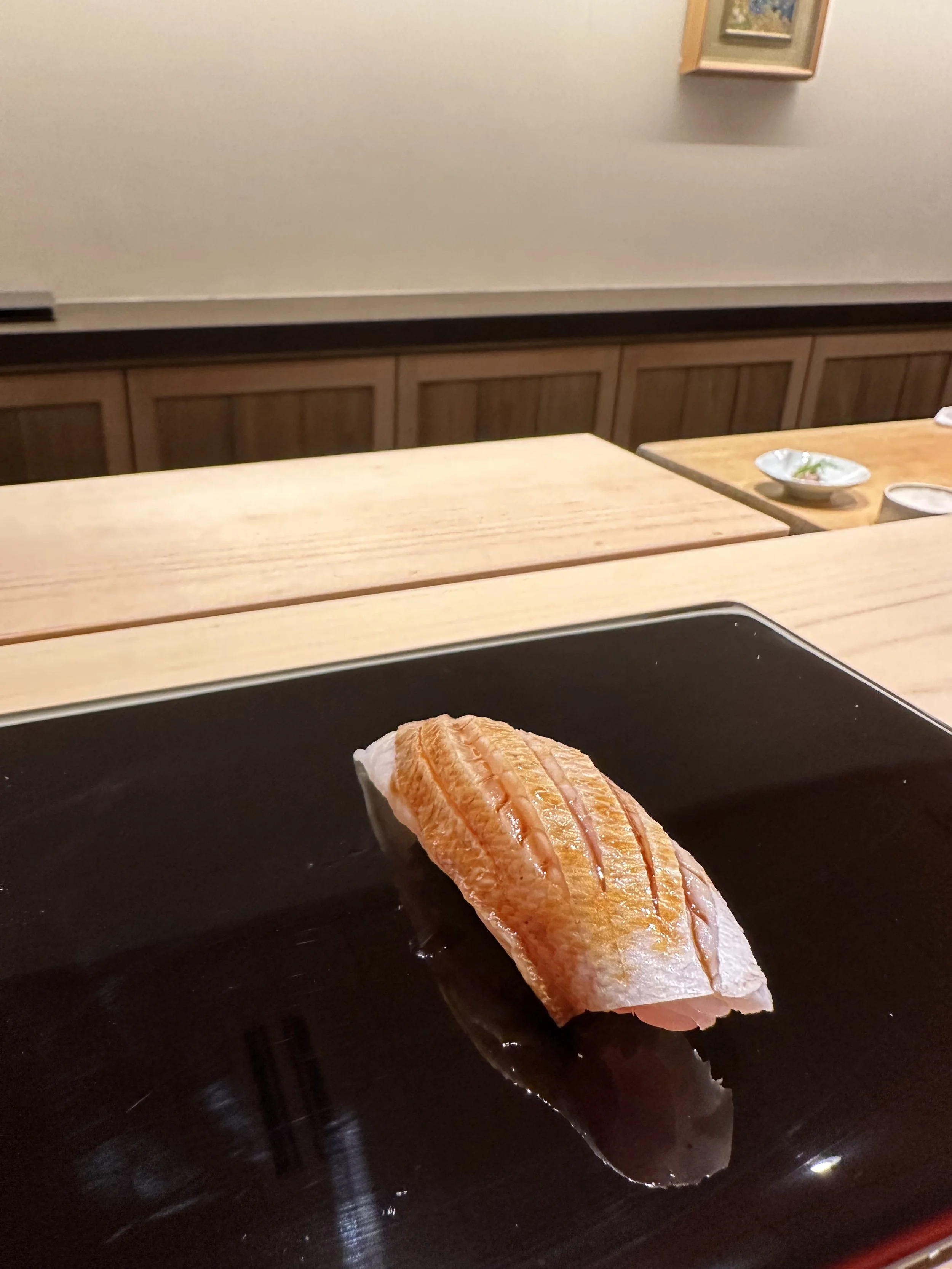
Shiro Amadai (White Tilefish or White Horsehead) is a rare delicacy, with only one in 1000 Amadai caught said to be of the Shiro variety. This was excellent, with a deep umami flavor and a soft texture from the fat.
Sawara (Japanese Spanish Mackerel) was the first of many on this trip and it was fantastic. Winter is when they peak in fattiness and the rich oiliness of the neta paired perfectly with the strong vinegar of the shari.
Akami (Lean Bluefin Tuna) - The neta was a bit cold and instead of a Zuke (soy marinade), this was served as-is with a small brush of soy. I do think a Zuke treatment would have benefitted this piece as it was a bit flavorless. The temperature of the neta could have been a bit warmer too.
Chutoro (Medium Fatty Bluefin Tuna) was much better. A generous piece with a great aroma and nice texture.
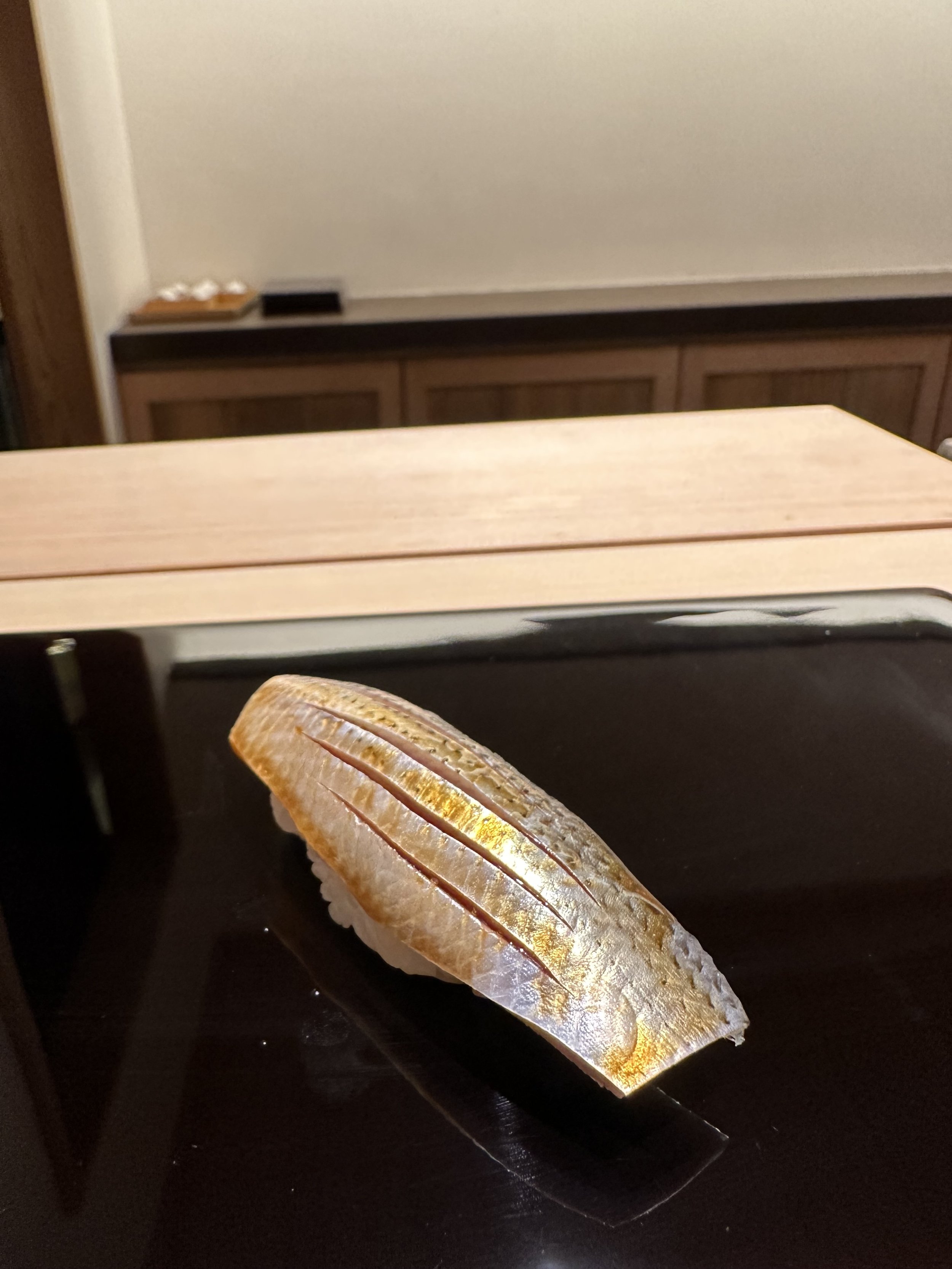
Kohada (Gizzard Shad) is usually one of my favorite pieces as I love Hikarimono (silver skinned fish) and this one is a staple of Edomae sushi. Every chef has their own method of curing and vinegar washing, but here I couldn’t even tell as the neta was served ice cold which not only firmed up the fish considerably, but also muted any of the flavor. Confusing. It was a very pretty piece though, so I’ll give taisho that.
Akagai (Blood Clam) was nicely scored to minimize the chewiness that is typical in this piece. The salty clam paired nicely with the strongly vinegared neta.
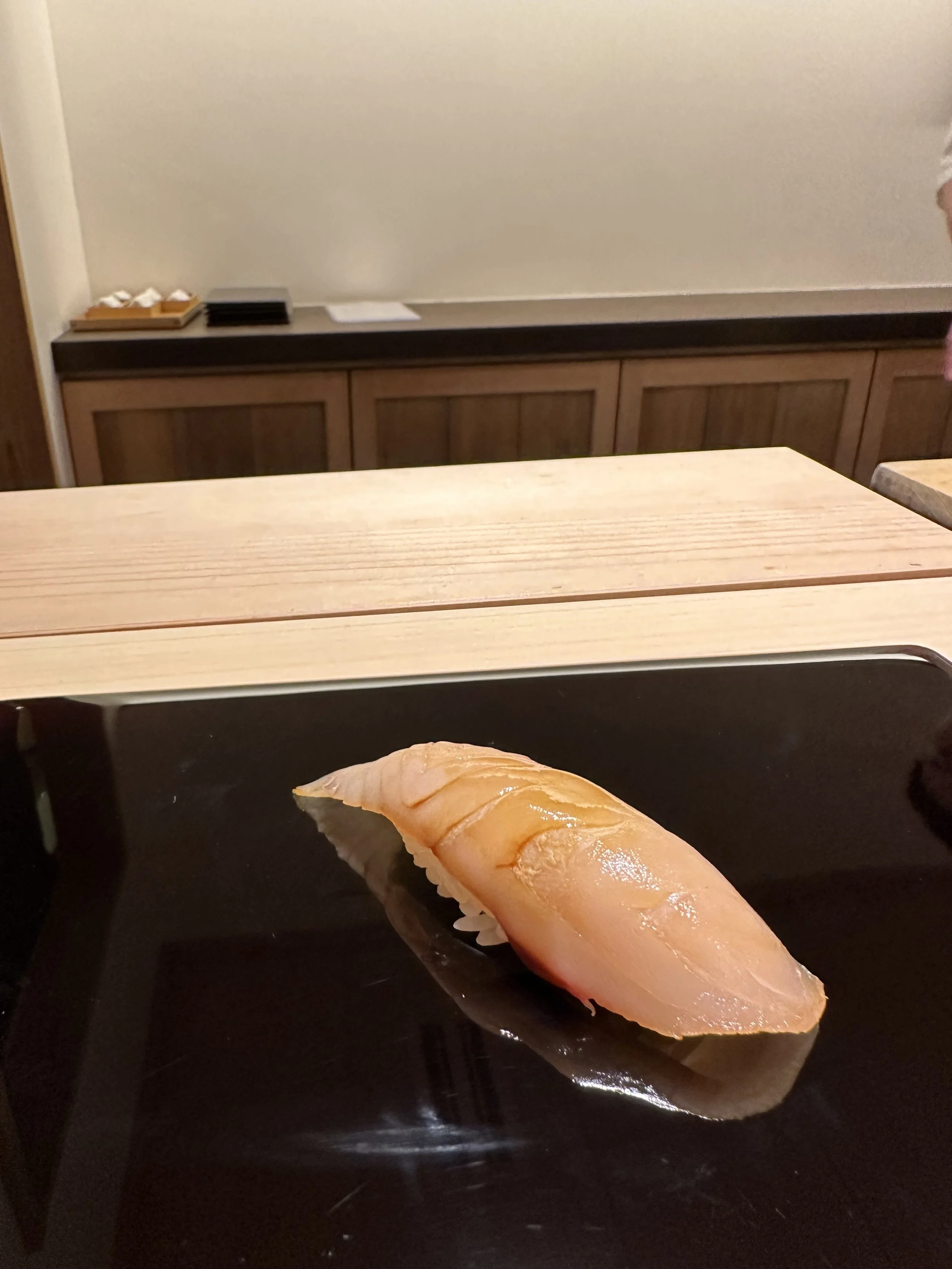
Kasugodai aka “Spring Child” Baby Sea Bream. When the more common Tai (Red Sea Bream) is young (~1 year old) it is called Kasugodai. While rare, they can be caught year round. The flavor is milder and texture leaner than the adult version so it’s typically prepared as Hikarimono with the skin still on and cured in sugar and salt. Here, it’s executed perfectly with a small piece of yuzu under the neta adding some brightness. Bite of the night!
Kuruma Ebi (Tiger Prawn) was up next and like so many of the other steamed/cooked dishes here was once again overcooked. The sweetness of the Ebi is lost and a chalkiness takes over the mouthfeel.
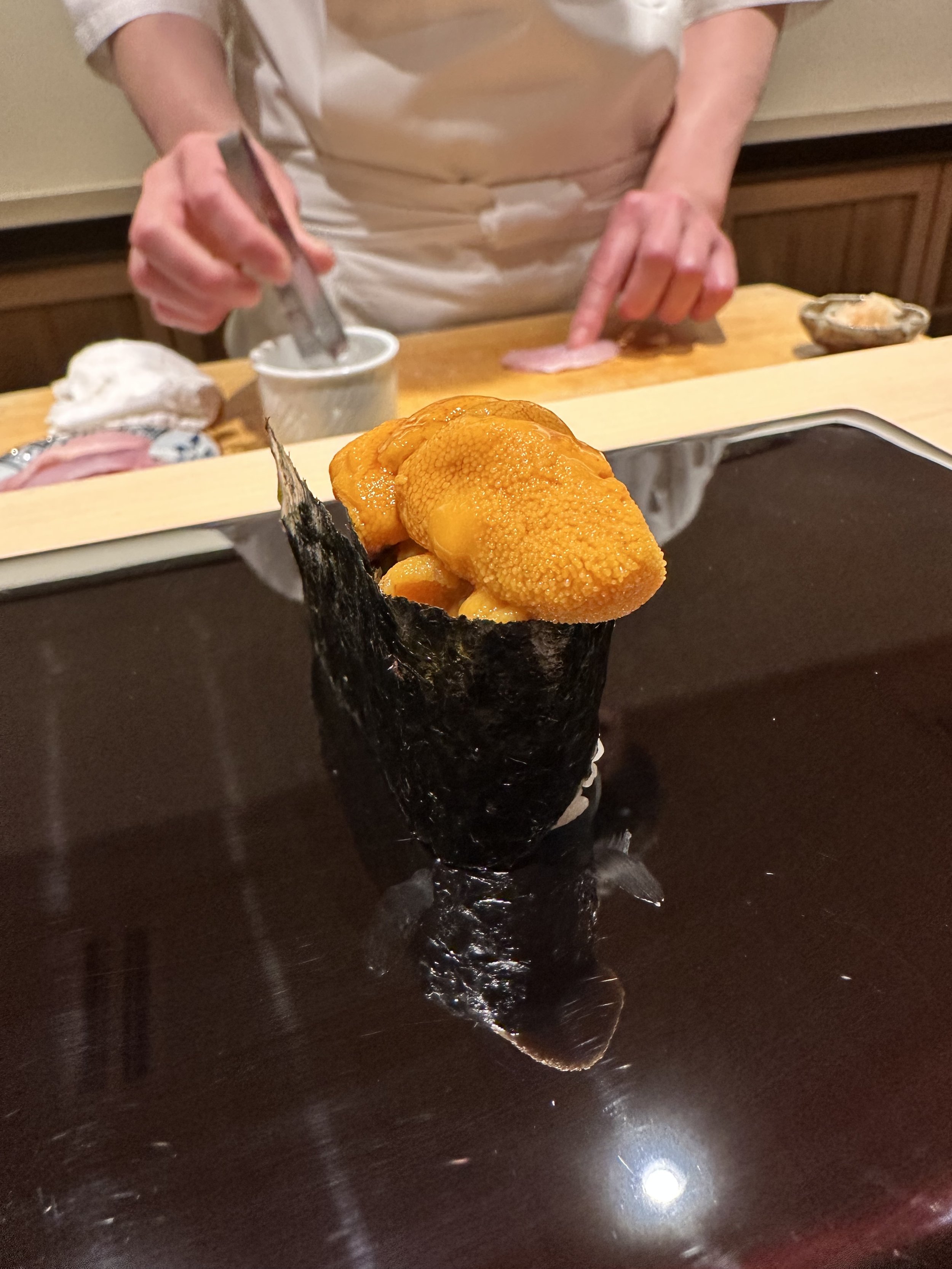
A Gunkanmaki (“battleship” roll, so named because of the oblong shape) stuffed to the gills with Hokkaido Uni was up next and was just perfect. Sweet, cold, creamy and saline in perfect balance. The ice cream of the sea as I like to call it.
The last piece of nigiri was Anago (Sea Eel). Here, steamed perfectly until it just melted in your mouth with a light touch on the eel sauce which was appreciated.
A firm Tamago (egg) and Houjicha (Roasted Green Tea) Ice cream were served to finish. No add ons were offered (nor desired, to be honest).
Is Sushi Yuuki Overrated?
While there were some moments of brilliance (Kawahagi, Sawara, Kasugodai, Uni) I left the restaurant confused by all of its recent accolades. There seems to be a lack of attention to the cooked/steamed items which I have noticed are typically handled by assistants. Additionally, there seemed to be a lack of interest in the customers themselves, with the chef on his phone throughout the meal (and it was not only us foreigners at the counter, either). The Nigiri were better than the Tsumami, but with all the great Omakase courses in Tokyo (and beyond) I don’t see myself coming back to Yuuki any time soon. While you may argue it was an off night, I did confirm similar recent experiences after I spoke to some trusted sushi-fiend friends.
This goes to show that the guidebooks and awards are not always infallible. On to the next!
Eat Well,
Aria
