Innovative Yakitori in Tokyo: Review of Dinner at Mizuki (水づき)
This winter, in preparation for our inaugural tour, A Taste of Tokyo: The Finer Things happening this June 2026, Nickie and I dined at three of Tokyo’s most worthwhile yakitori omakase counters. Grilling chicken from head to tail over binchotan charcoal is a time honored Japanese tradition, and now there are some chefs elevating the experience to another level. Here is a peek into one of them.
Mizuki (水づき) - The Basics
Dining Date
Dec. 15, 2025 @17:30, Dinner Seating
How to Book
Getting harder every month on omakase.in. They release two months in advance on the first of the month; however, if you’re not on the site right as it refreshes, you may miss out on your desired date.
Cost
Omakase course only, not including add-ons or drinks: JPY13,200
Photos
For a full photolog of this meal, check out the Instagram stories for @Explore.Soigne starting here.
Background
Mizuki quietly relocated from rural Gifu (two hours west of Tokyo by train) to Tokyo in December of 2024 and in one year has already managed to achieve a ~4.1 Tabelog rating and a Hyakumeiten (Tabelog Top100 in Category award).
Yakitori is a notoriously competitive category to achieve a high rating on. As of this writing, there are only 18 Yakitori shops rated 4.0 or higher on Tabelog in Tokyo. Compare that with roughly 130 Sushi-ya with the same distinction and you can see why Mizuki achieving a 4.1 in under a year had piqued our interest.
My opinion is that this tendency for lower scoring on yakitori is because, in many people’s eyes, it's still seen as a basic izakaya food not “worthy” of high prices or ratings.
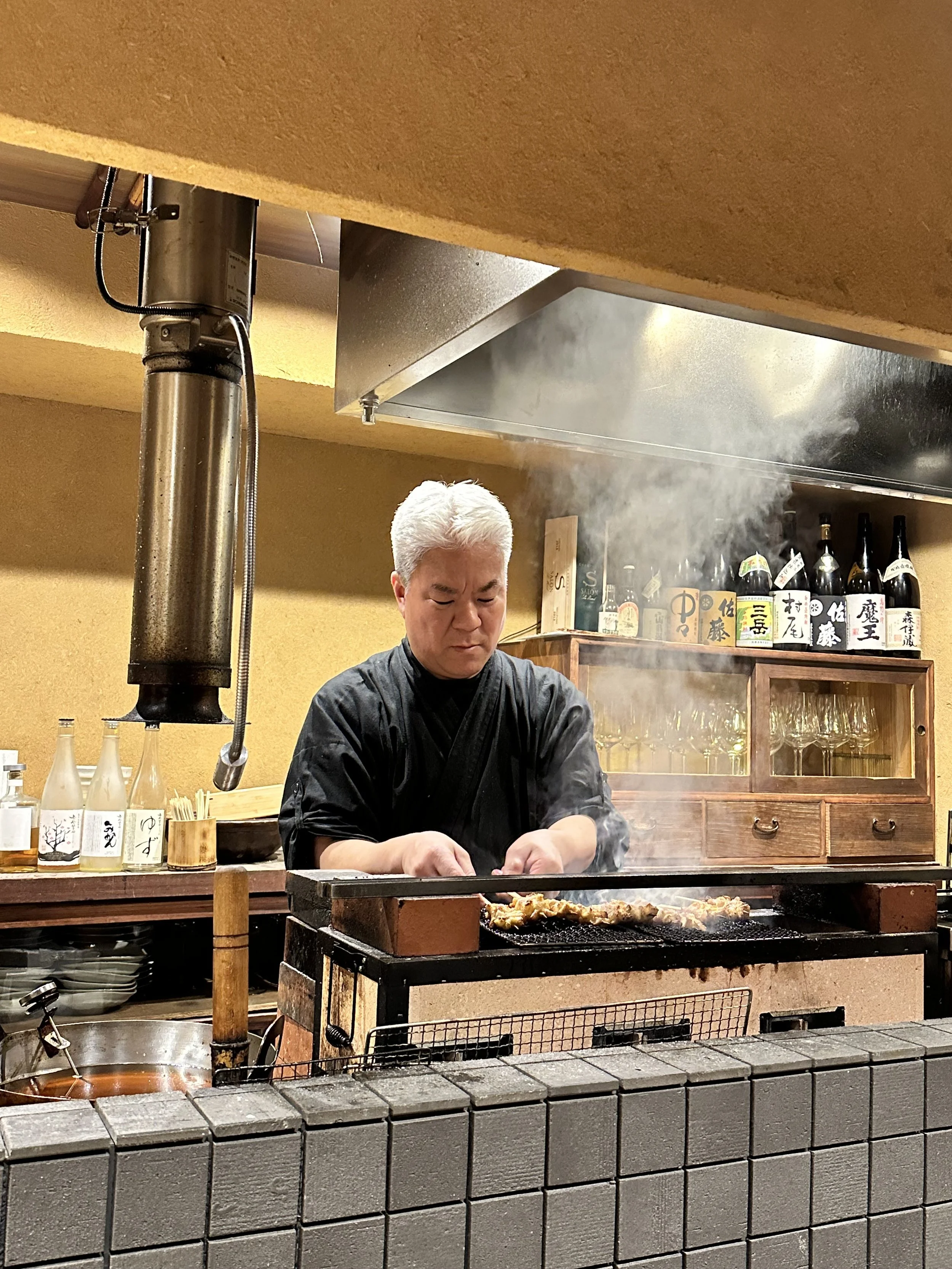
Further adding to the allure…Mizuki san is not a disciple of any of the original Tokyo chefs who popularized this more refined form of yakitori omakase. Silver-haired and certainly not in his 20s any more, he has carved his own path and made a difficult move from rural life in Gifu to the bustling concrete jungle of Tokyo.
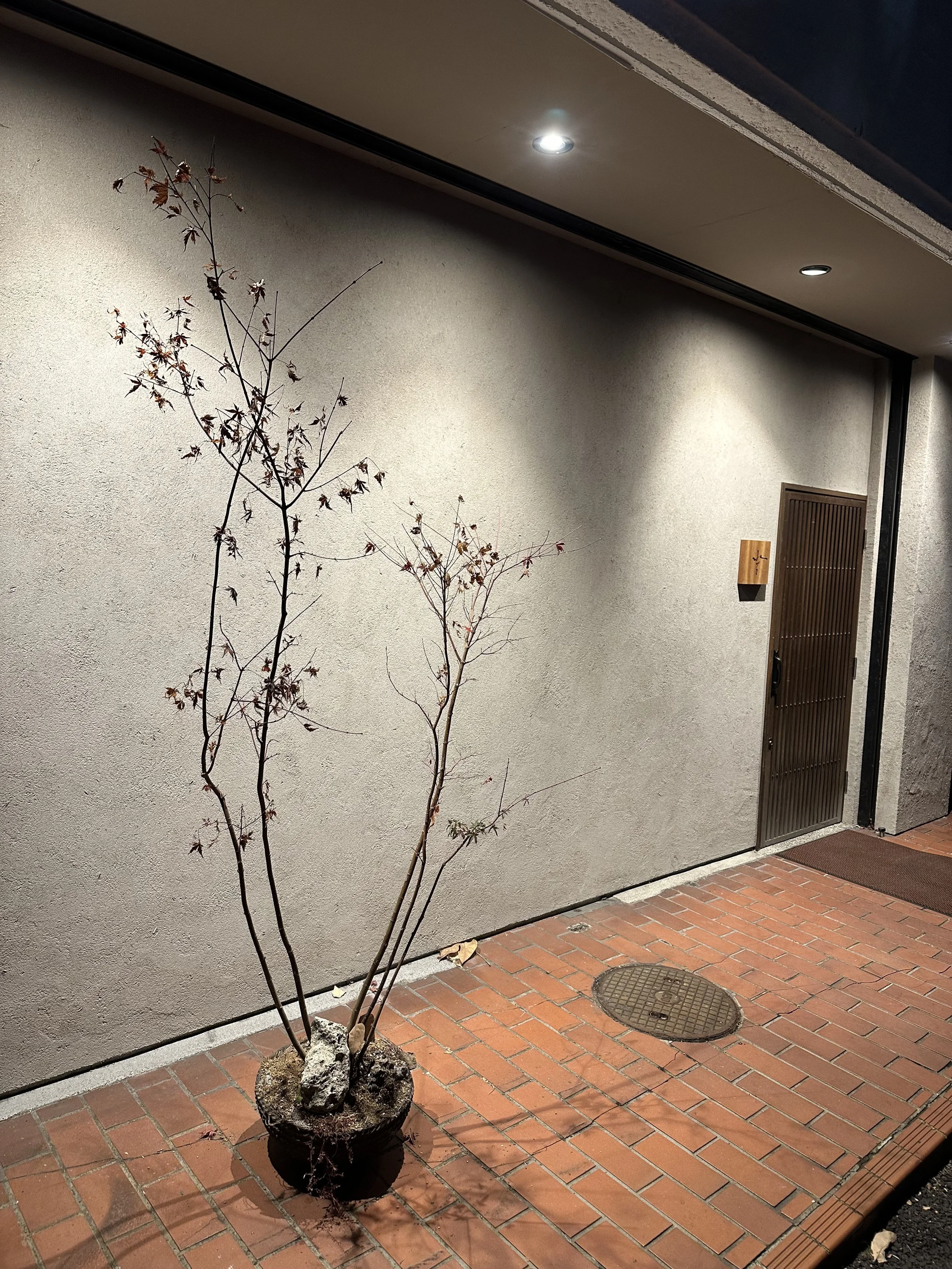
Mizuki is located at the border of Ebisu and Shirokane off a very busy street and adorned with just a small sign and slatted wooden door. Stepping in you could immediately tell this was going to be a classy affair. We were seated on the long side of a spacious nine-seat counter all done in gorgeous woods, with earth tone walls and a low slung ceiling. In front of us is taisho’s immaculate kitchen with two binchotan grills and a burner and pot being used as a deep fryer. With the soft jazz soundtrack in the background, this felt like I was at a rich uncle’s wintertime cabin.
It was refreshing to see something other than Bordeaux and Burgundy on a Japanese wine list. We went with a bottle of 2022 Domaine aux Moines Savennières Roche aux Moines for the meal, though he had an extensive collection of rare Japanese whiskey behind the counter.
Tsumami (Appetizers)
Although Mizumi san uses mostly Shiga Omi Jidori chicken (known for its lower fat content, better texture, and deeper flavor), the first couple bites are from the much rarer ornamental breed Chabo (Japanese Bantam). These chickens are known for their higher fat content (and typically used as show birds!)
The first course was a duo of Chabo Thigh with Skin and Breast. These were bursting with juices, especially the thigh, and very well seasoned. It was hard to distinguish texture here because of the juiciness.
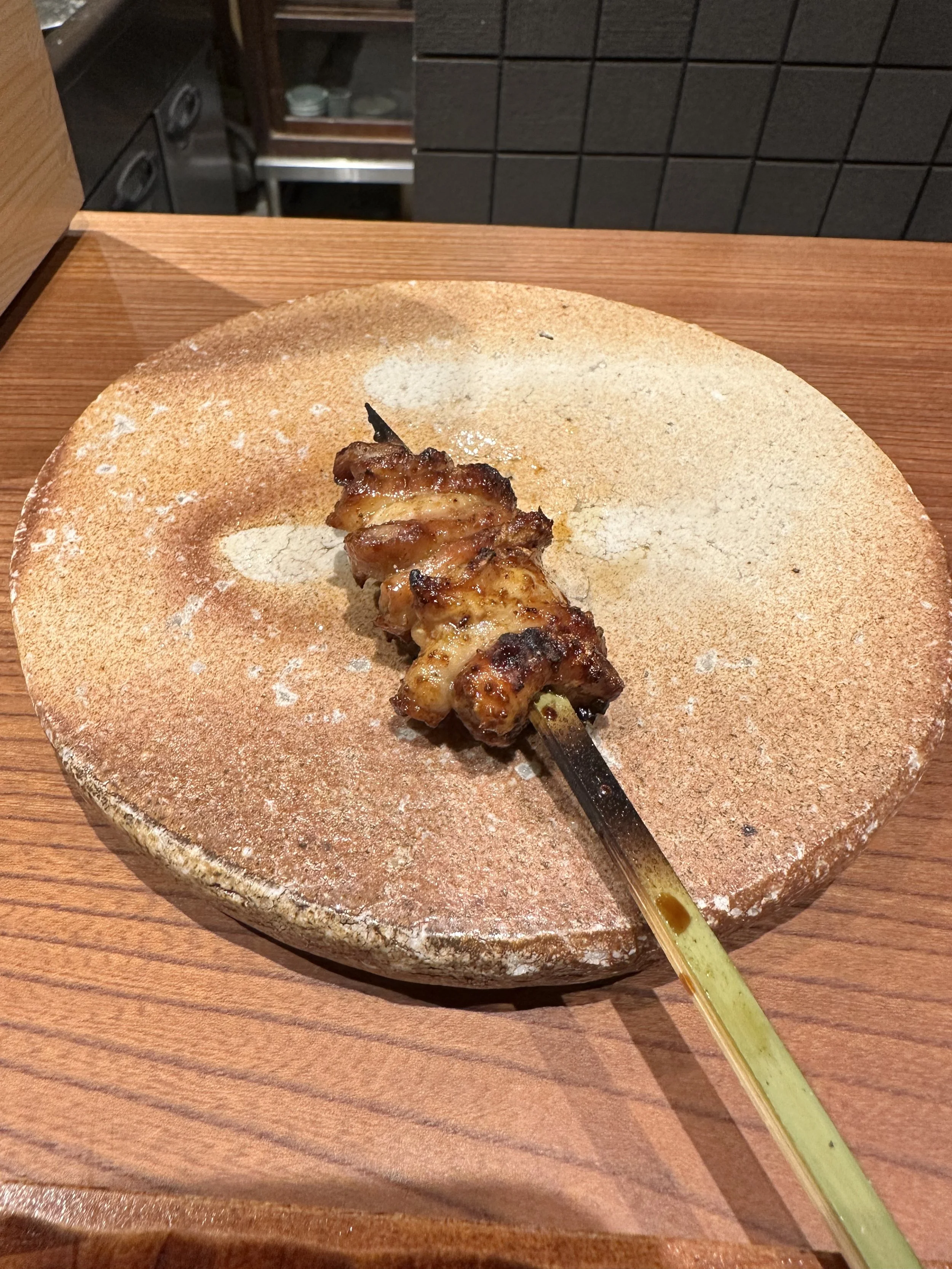
Second was a duo of the Shiga Omi Jidori chicken that we would be served for the remainder of the night’s chicken courses and yakitori skewers. Again, we were served Thigh with Skin and Breast. These were notably more textural (yet not at all tough!) and with a much meatier flavor, though not as juicy.
Comparing the two chickens, they reminded me of the textural difference you notice between Wagyu Ribeye (soft, almost melting) and Skirt Steak that gives more of a chew with also much more beef flavor.
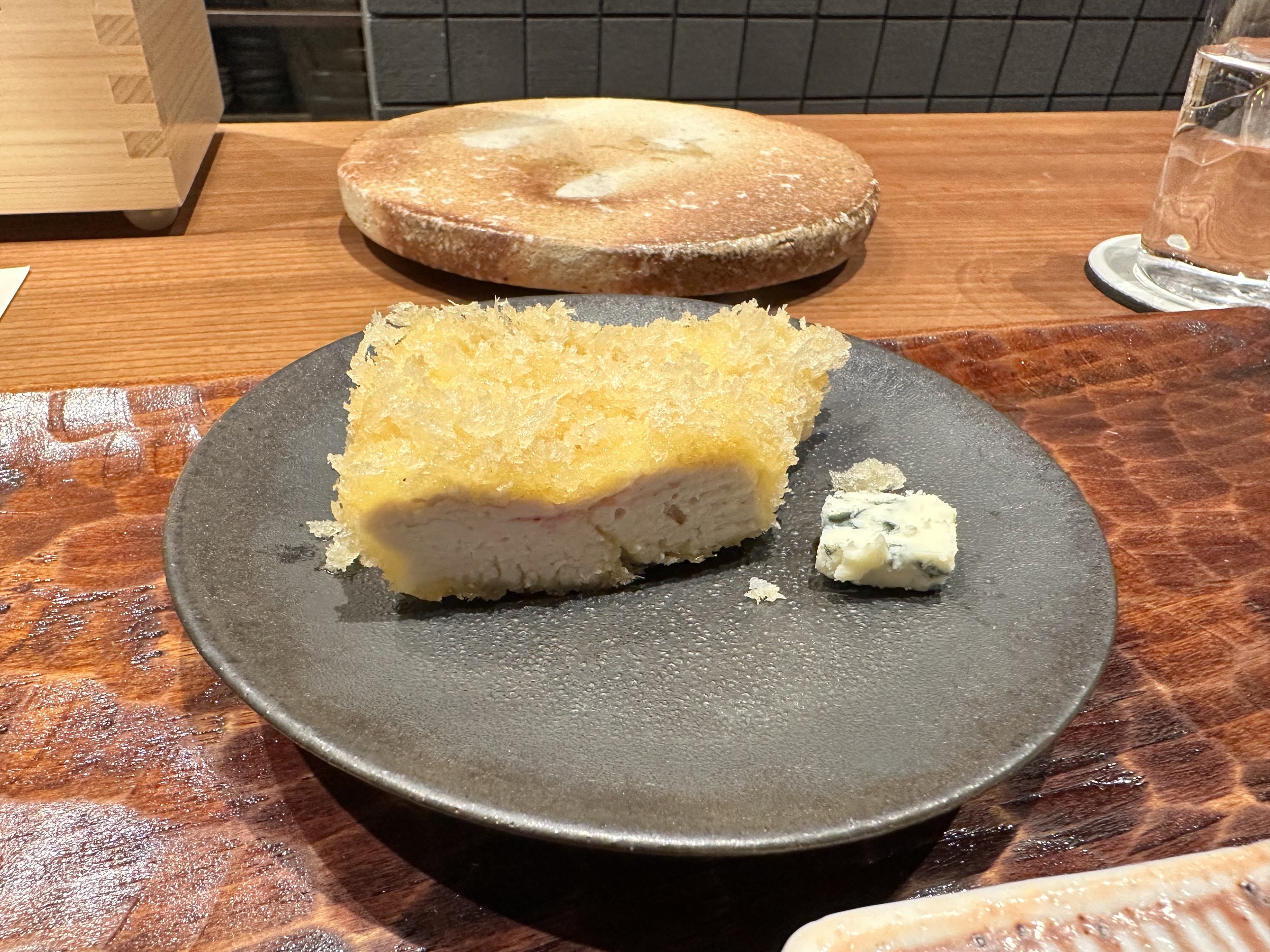
Next up on the appetizers, taisho fried Torikatsu (Fried Chicken Cutlet) in front of us to crispy, golden perfection and then placed a piece of blue cheese (!) next to the katsu on our serving plates. Biting into the katsu was like biting into a crispy cloud. The airiness in the texture of the batter and the chicken itself was unlike any katsu we have ever tried. Adding the small bit of blue cheese took it to another level, adding a subtle funk and creamy richness like a grass-fed butter might do to a steak. His breading and frying technique could easily rival any tonkatsu specialist.
Yakitori (and so much more…)
The first skewer of the night is Tsukune (Chicken Meatball) lightly brushed with tare (sweetened soy and sake sauce). Coarsely chopped (not ground) chicken meat is mixed with chicken cartilage and egg to create an airy textured meatball with little bits of crunch from the cartilage to keep the texture interesting. I’ve never been served Tsukune as the first skewer, and I didn't mind one bit!
A Sori (Chicken Oyster) skewer is next. This is a prized dark meat cut from near the thigh that is extremely tender. Each chicken only has two of these small muscles. Here, it is served with a large piece of skin over it and a big piece of grilled spring onion. Fantastic flavor and I love how Mizuku san constantly balances textures. The oyster alone would be delicious, but maybe a little boring. The skin and the creaminess of the giant spring onion kept things interesting.
Bone-In Thigh is served next with its very crispy skin. This is not served on a skewer, but is semi split for ease of eating. Impossibly tender with juices dripping out and you get a great hit of his binchotan charcoal smokiness due to how long this bone-in piece had to cook. It’s served a bit pink in the middle but this is not unusual at all in Japan.
Vegetable courses are common (thankfully!) between all the meat but can sometimes feel like throwaways. Mizuki san spends a lot of time on his vegetables and they are just as much stars as the chicken itself. We had watched Shiitake Mushrooms be flash fried a couple courses ago and now they were brushed with tare and grilled. A few shavings of katsuoboshi (bonito flakes) to finish. It was the most deeply umami, smoky, and slightly sweet Shiitake we’ve ever had.
Zuri (Chicken Gizzard) was the next skewer up. A crazy texture on this. Snappy on the outside and tender on the inside, almost as if you were biting into a Persian cucumber. Not at all chewy like zuri can sometimes be.
Another interlude for another incredible vegetable. Leeks are completely blackened over binchotan, outer skins removed with knife work that could rival any sushi chef and inner skins perfectly draped over the completely melted and creamy inside. Each bite was like the sweetest mashed potatoes you could ever try with a hint of smoke and onion.
A skewer of Seseri (Chicken Neck) is up next. A lot of people think the thigh is the juiciest part of the chicken. I urge you to try Seseri. I love this cut and Mizuki san cooked it to perfection. Not overly charred, it let the umami of the chicken shine through without the use of tare.
Kawa (Chicken Skin) is next. By contrast, this skewer had plenty of char (hard to avoid with the fatty skin) and a deep smoky flavor. I appreciate that enough meat was left on the skin to keep things textural.
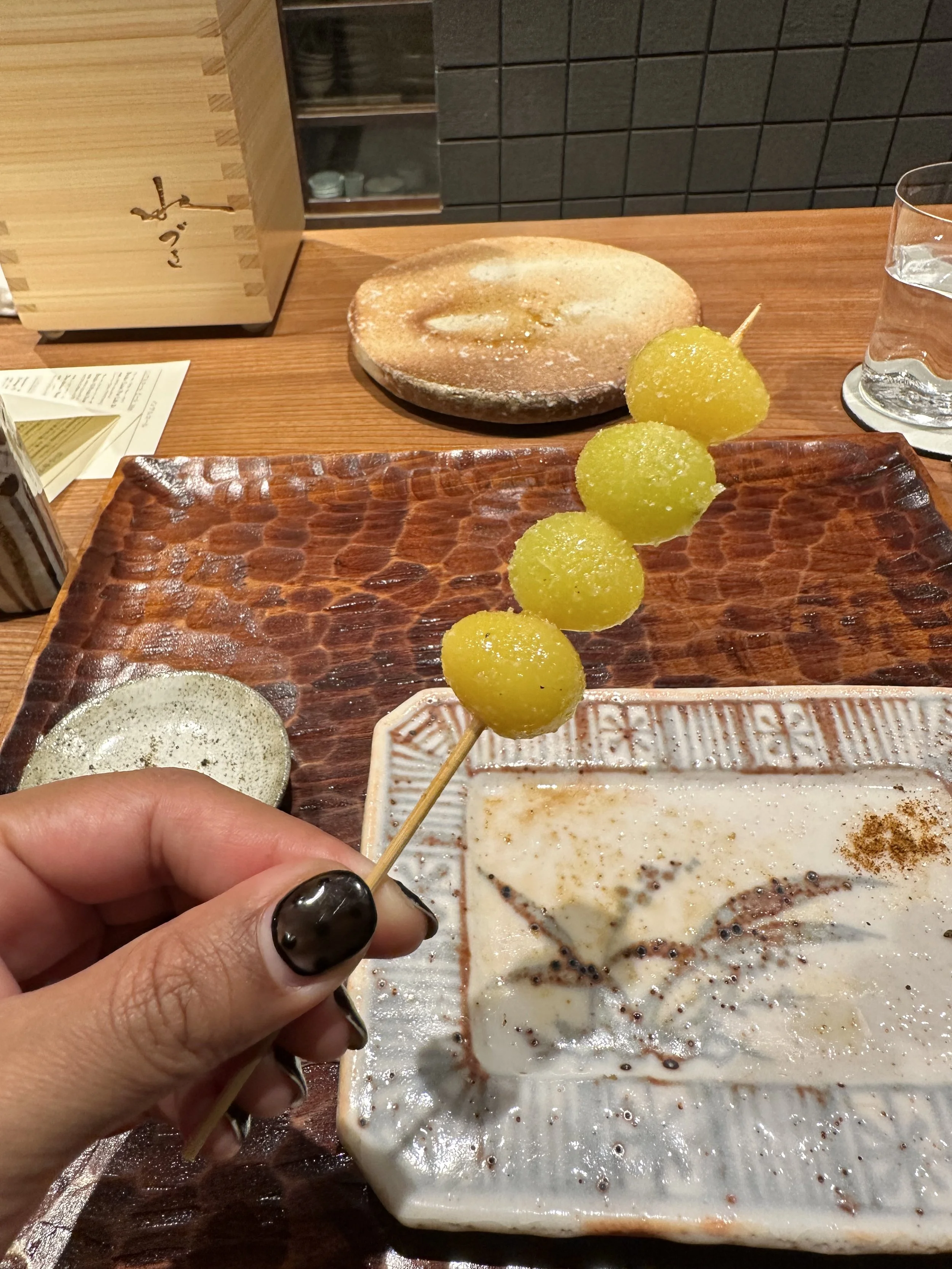
Now, some brilliant Ginnan (Gingko Nuts). A Ginnan skewer is probably the most iconic yakitori vegetable and these did not disappoint. Blind tasting I would have mistaken these for slightly cured quail egg yolks–delicate flavor and jammy texture.
Next up we were served a bowl with a piece of Agedashi Tofu (fried tofu) in it, which Mizuki san then topped with a deeply flavorful and slightly sweet ground chicken sauce and then topped again with a “coleslaw” of allium shoots (garlic, scallion, shallot) and katsuoboshi. I swear he was going for the flavors of a sloppy joe or pulled pork sandwich with coleslaw here. The complexity of the textures and flavors were really on another level.
Now we start moving past yakitori into another realm. Two pieces of off skewer Wild Maillard Duck Breast from taisho’s home prefecture of Gifu are served as a sort of teaser of what’s to come. Cooked medium rare to perfection over the binchotan with a bit of the skin on, these bites were delicious.
Now Mizuki san moves the burner into clear view of everyone to reveal a pot of duck stock that he begins hand tearing wild mountain vegetables and mushrooms into. We are each served a bowl of Wild Maillard Duck Hot Pot including a Duck Tsukune (meatball) and Duck Thigh meat in a very rich, concentrated stock. This was heavenly, though the stock and duck meat were very rich, the wild mountain herbs and vegetables kept things fresh enough. Overall, it was deeply satisfying.
The leftover hot pot broth is then served as a dipping sauce with a fresh plate of Soba (buckwheat) noodles. Brilliant.
No Japanese meal is complete without a gohan (rice) course. Here, Mizuki san brings out a beautiful donabe (earthenware pot) and begins mixing in ingredients from earlier in the meal to create a Maze Gohan (Mixed Rice) of chicken breast with the skin on and those meltingly delicious leeks. Think of this as Singaporean/Hainanese Chicken Rice amped up on the umami a few notches. So comforting I had two bowls.
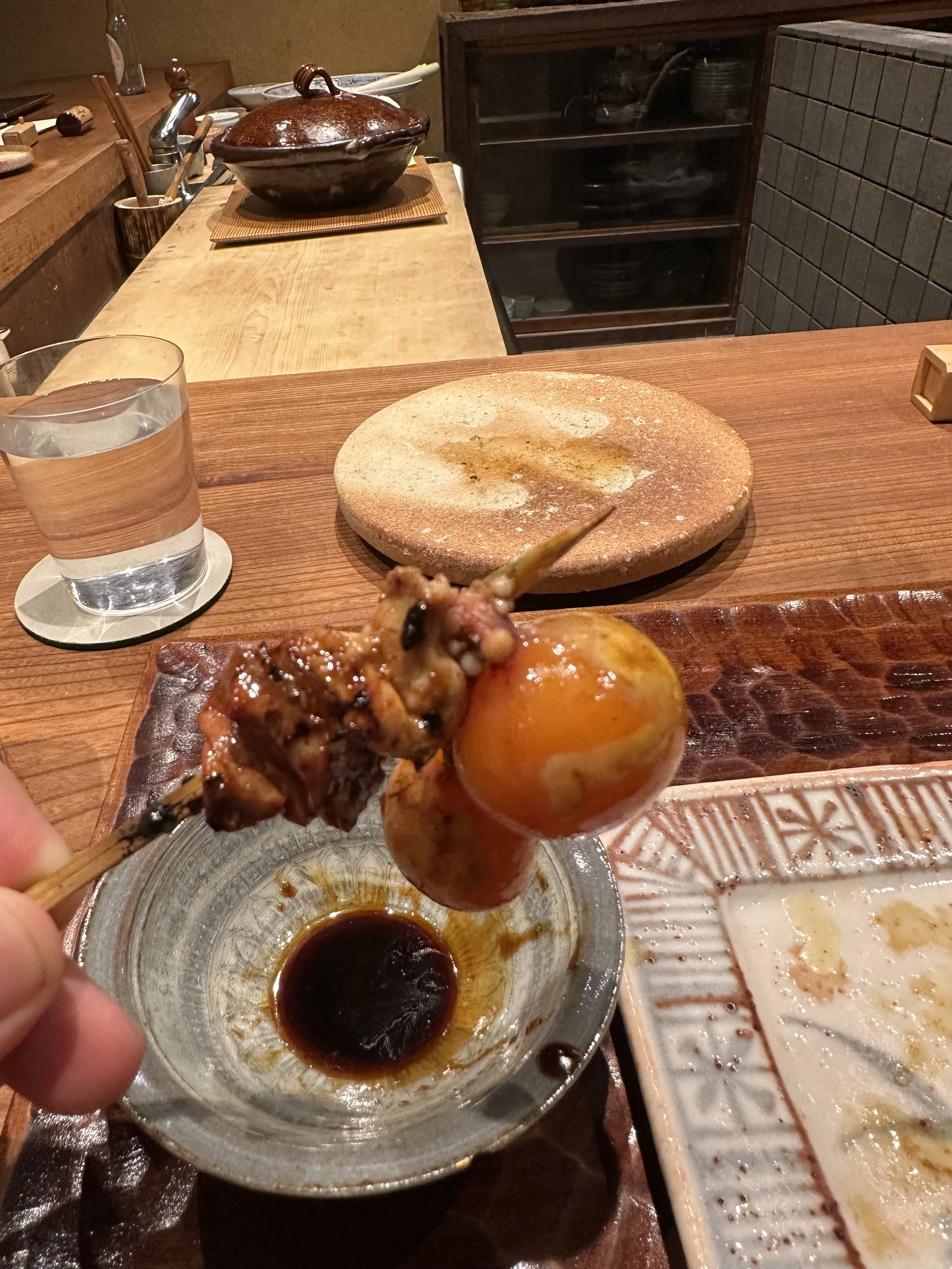
At this point a small menu of add-on skewers is brought out for your selection if you wish. I added on Hatsu (Chicken Heart) which always has such a nice bounciness on the outside revealing a juicy tenderness inside and Chochin (Chicken “Lantern”), a rare specialty only available in Japan. This is a piece of liver and the ovaries of the chicken with fertilized eggs still attached. The way the orange globes of yolk hang looks like a glowing Japanese lantern, hence the name. Perfectly runny yolk with the richness of liver. Up there for bite of the night.
After the add ons, everyone is served a small portion of very spicy Indian Curry on top of the mixed rice maze gohan from earlier. Curry rice is quite common at the end of Japanese meals but usually using milder Japanese curry. I loved the bold use of spice here and the little pieces of chicken in the curry were super tender.
Dessert was Fresh Strawberries over Custard with a very light clear strawberry jelly over the top. Refreshing (and thankfully light) end to a beautiful meal.
Did Mizuki Ruin Yakitori for me?
Calling Mizuki simply a yakitori restaurant is doing it a bit of a disservice as yakitori is really a term for skewers. Tori Ryori is probably the more accurate term as it refers to “chicken” or “bird” dishes more broadly. Maybe this is why Mizuki san refers to himself as neither and the restaurant’s name is simply “Mizuki.”
There is something truly singular about this place and the most impressive part is that he is doing all the cooking himself. At some points he was grilling multiple cuts, tending to the deep fryer and providing pairing instructions to his staff for customers requesting drinks, all while never missing a beat or breaking a sweat.
For me, this is the best “yakitori” I have ever tried and I will continue to return as often as possible. I cannot point out a single miss (and I’m always looking). If you go in expecting very traditional skewers you may be disappointed. You won't find the classic Negima (Thigh and Green Onion) or Chicken Breast with Yuzu Kosho here. But what you do find is something so much more. Get on the books now (or better yet join our tour this June) because I anticipate reservations will be impossible soon.
Shokunin (master craftsman) is a term that gets thrown around lightly and without the respect it deserves these days, but I can’t think of a better word to describe Mizuki san.
Eat Well,
Aria
